

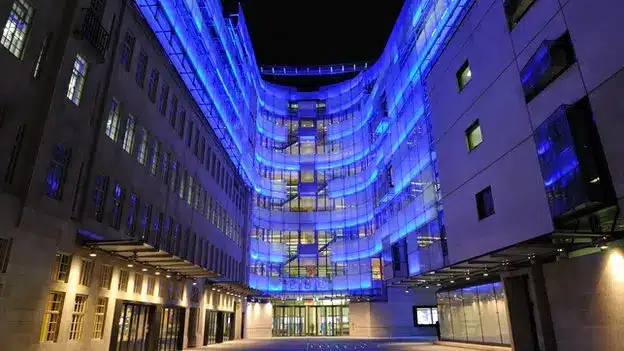
In its response to the government’s Green Paper, the BBC says the future of British public service media is at a turning point. It argues that the corporation still matters far beyond television. It presents the BBC as part of the UK’s democratic life, cultural identity and economic strength.
But it says the old model is under strain from new habits, new platforms and falling real income. According to the document, licence fee income is now about a quarter lower in real terms than at the start of the current Charter. The BBC says it has already delivered more than £1.5 billion in savings and still has around £500 million more to find.
That squeeze, it argues, has forced hard trade-offs and made reform urgent. The bigger fear is not only institutional decline. The BBC says Britain faces a wider crisis of trust, with disinformation spreading fast and social media driving people into rival camps.

DEMOCRATIC RESILIENCE
In that climate, it casts trusted news as a pillar of democratic resilience and national security. The World Service, in this account, is a strategic asset, not a luxury. The corporation also makes its case with scale. It says 94% of adults use the BBC each month, 74% use it for news each week, and the World Service reaches 418 million people weekly. Yet it argues that size alone will not protect British broadcasting from global streamers and tech giants.
Without reform, it warns, UK stories and creative jobs could lose ground. The answer, the BBC says, is a broader public role. It wants to fight disinformation, strengthen local news and support grassroots democracy. It wants to back British talent, protect homegrown programmes and expand trusted news overseas.
It also plans to make BBC Bitesize more personalised and interactive for every child. The document says the BBC must change as well. It wants to reach audiences on platforms such as YouTube and open iPlayer and Sounds to other UK providers. It also proposes moving more money and decision-making across the UK to support jobs, skills and regional growth.
A NEW CHARTER
In short, it wants to build public service media that can compete at scale in the platform age. The BBC also asks for a new Charter that protects editorial, financial and operational independence. It wants stronger public accountability, a rethink of board appointments and an end to the Charter’s fixed expiry date.
The aim is to reduce uncertainty and limit the risk of political interference. Funding remains the hardest issue. The BBC does not back one model, but it insists the system must stay universal: funded by everyone, for everyone. Its closing warning is blunt: keep the status quo, and the BBC will drift into managed decline.